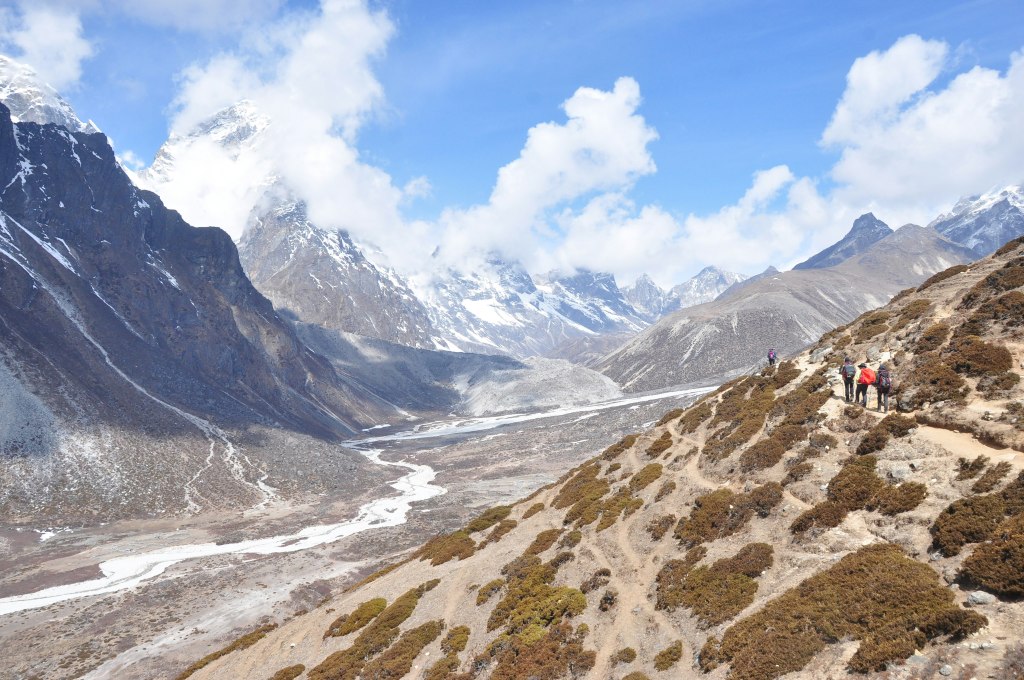
Venture beyond the ordinary with the Annapurna Base Camp Trek, an experience that promises not just a journey, but a tale worth sharing. This adventure takes you deep into the heart of the majestic Annapurna range, offering up-close and personal encounters with some of the world's highest peaks. Immerse yourself in the tranquility of the remote Himalayan wilderness, as the awe-inspiring vista of the Annapurna Massif surrounds you. The trek offers more than just natural splendor, with the charming Gurung villages en route offering a peek into the rich local culture. The cherry on top is reaching the Annapurna Base Camp itself, a feat that will fill you with an unparalleled sense of accomplishment. From witnessing dramatic sunrises at Poon Hill to standing in the shadow of giants at the Annapurna Base Camp, every moment of this trek weaves together to form an unforgettable tapestry of adventure, beauty, and discovery.
Why Annapurna Trek?
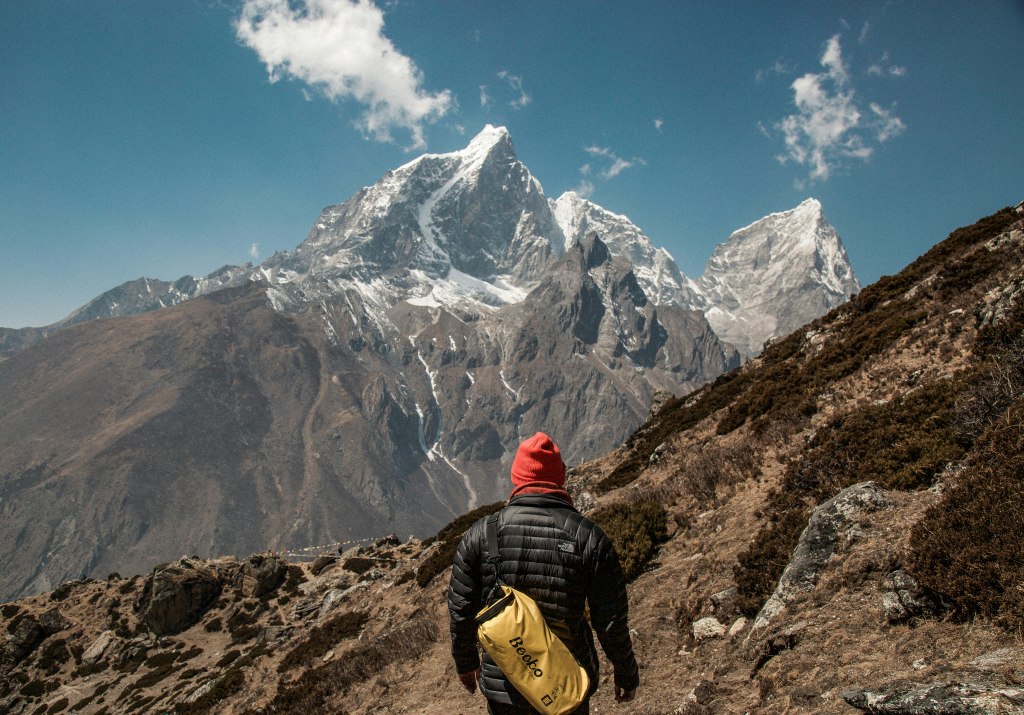
The Annapurna Trek is a standout choice among Nepal's treks, primarily due to its extraordinary array of diverse landscapes, deep cultural immersion opportunities, and abundant biodiversity. This trek takes you through a breathtaking spectrum of ecosystems within a compact region, transitioning from verdant subtropical forests to stark, alpine terrains. An immersive journey into the traditional culture of the indigenous Gurung and Thakali communities enriches the trekking experience beyond the stunning vistas, offering a unique window into their warm hospitality and rich heritage. The Annapurna Conservation Area, a sanctuary for diverse wildlife, adds a thrilling element of biodiversity to your trek, with a chance to spot numerous unique species in their natural habitat. These combined elements set the Annapurna Trek apart, making it a distinct and unparalleled experience among Nepal's trekking adventures.
What will the trip look like?
Day 1 – Arrive in Kathmandu City
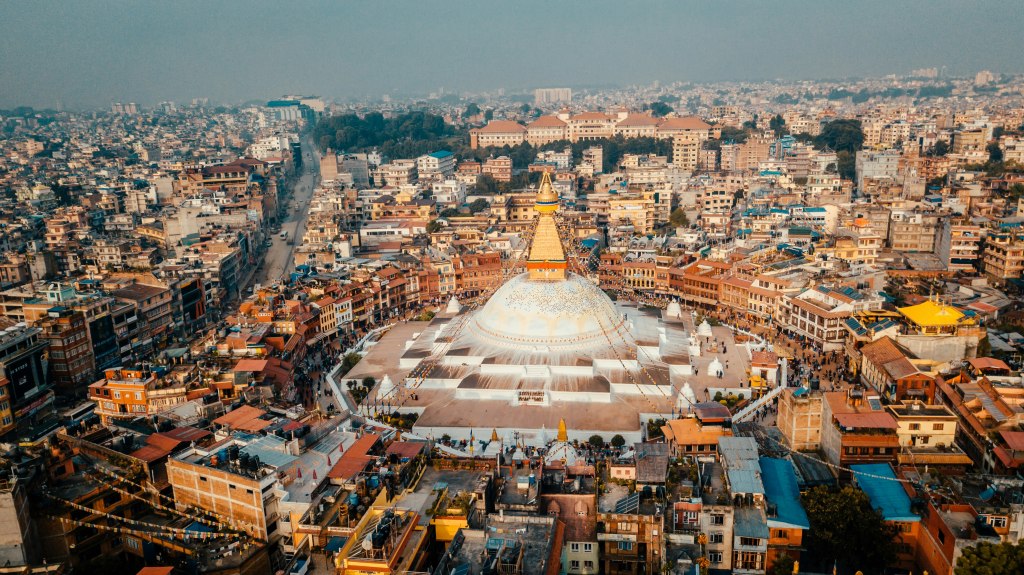
You will be welcomed by a guide at Tribhuwan International Airport Kathmandu, and they’ll bring you to Kathmandu City. Did you know the Kathmandu valley has the highest concentration of UNESCO World Heritage sites? Immerse yourself in Nepal’s rich culture and history as your guide brings you around iconic sites including the Temple of Pashupatinath, Bouddhanath Stupa, Swayambhunath Temple and Kathmandu Durbar Square
Day 2 – Scenic drive from Kathmandu to Pokhara
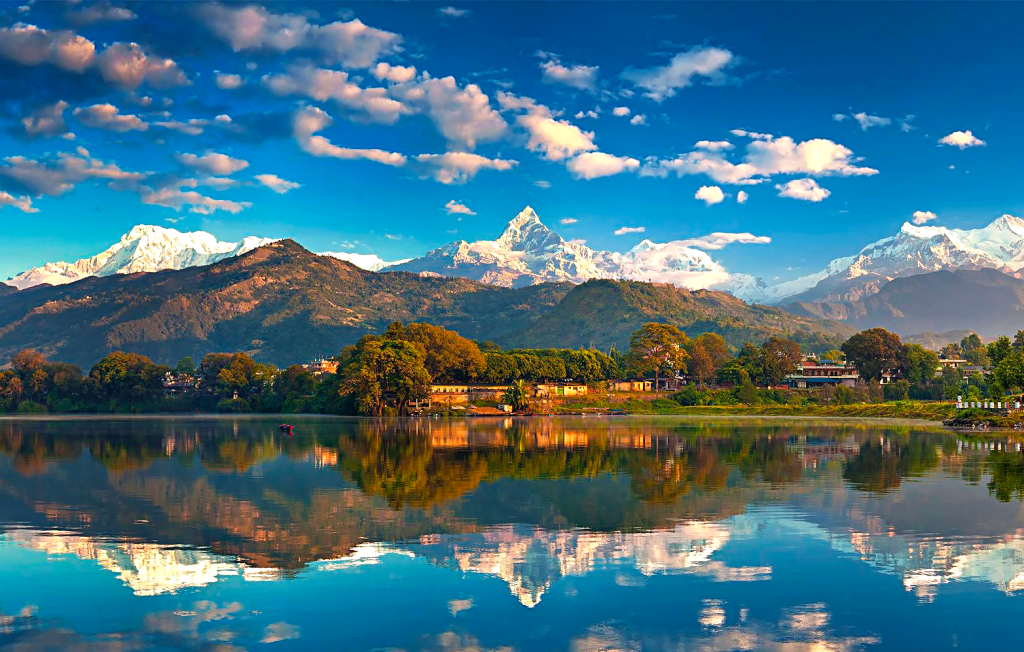
We'll take a 6 to 7-hour drive to Pokhara. The ride is really pretty, with views of snowy mountains, green hills, villages, and rivers that people raft on. Pokhara is a peaceful place with great views of different mountains like Annapurna, Machapuchare, Dhaulagiri, Lamjung Himal, and Manaslu. The town is by the Phewa Lake and is less busy and smaller than Kathmandu. It's a great place to start our trek.
Day 3 – Pokhara to Ghorepani
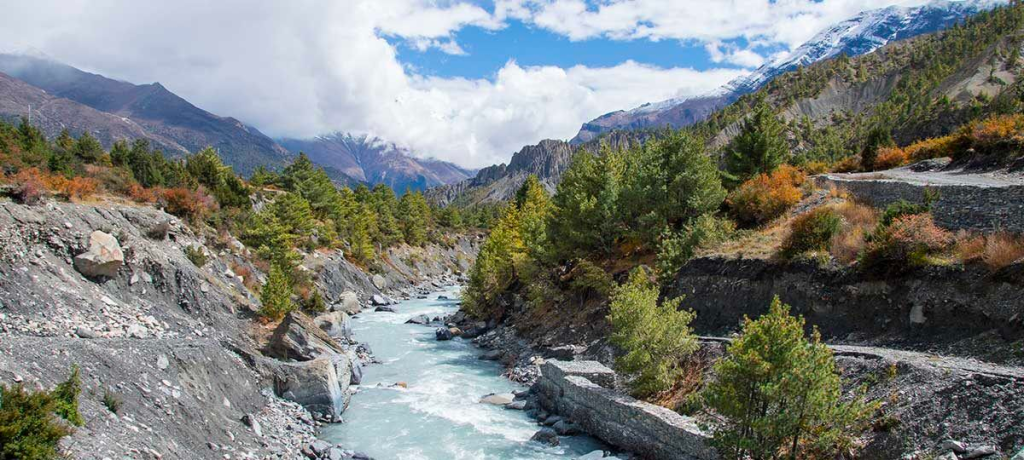
The Annapurna Base Camp and Poon Hill Trek begins with a 3 to 4-hour drive from Pokhara to Ulleri, standing at 1,960m. This drive takes us through scenic locales such as Nayapul, Birethanti, Tikhedhunga, and Hille village, after which we start our trek. Our initial walk is a gentle ascent through charming villages and terraced farmlands, leading us into dense oak and rhododendron forests en route to Banthanti, at 2,250m. Keep an eye out for the playful Longgur monkeys that may be swinging through the trees overhead. Our journey then continues to Nangethanti, at 2,460m. After an hour of trekking, we reach our final destination for the day – Ghorepani, perched at an elevation of 2,840m.
Day 4 – Hike up Ghorepani to Poon Hill
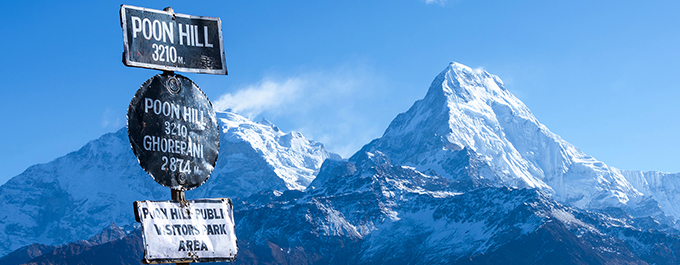
Starting our day early, we'll embark on a 45-minute hike to reach the peak of Poon Hill, standing tall at 3,210m. From this prime viewpoint, we'll be privy to an undisturbed, spectacular view of the sunrise as it illuminates the mighty Himalayan giants like Dhaulagiri, Annapurna, Machhapuchere, Nilgiri, Hiuchuli, and South Annapurna. As the day breaks, the silhouettes of other peaks gradually appear, creating an enchanting panorama that unfolds like magic before our eyes. Post this mesmerizing spectacle, we return to Ghorepani for a warm breakfast and then set off for Tadapani. The trail takes us through ridges adorned with pine and rhododendron forests up to Deurali, and then descends to Banthati, passing by breathtaking waterfalls and streams along the way. You'll also notice clear pools by the trail – these are the sources for 'Tadapani,' which translates to 'hot water,' providing water supply to a distant village.
Day 5 – Trek Tadapani to Chomrong
After breakfast, we start our trek downhill. We'll walk through forests full of rhododendron trees and fields in terraces. This part of the trek has great views of the upper part of the Modi valley. We then cross a hanging bridge to reach a village where the Gurung people live. If you'd like, you can donate some money for the children's school and its needs. After this, we walk up slowly through forests and a large area where a landslide happened. This part is an easy walk to Chommrong, which is 2140 meters high. From here, we can see some big mountains like Annapurna South, Hiuchuli, Gangapurna, and Fishtail touching the sky.
Day 6 – Trek Chommrong to Dovan
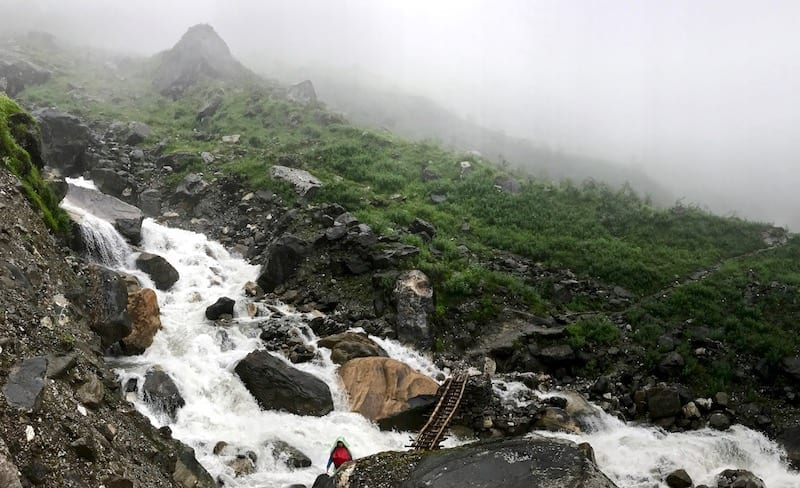
We'll start our trek by going down a staircase made of stone to reach the Chhomrong Khola. From there, we keep going up until we reach a small village called Sinuwa, which is 2340 meters high. Our walk continues through a thick forest. After that, we take a very steep path down a rock bank, moving through dense bamboo at the bottom of the gorge until we reach Bamboo. After we have our lunch, we go up again through the forest along the Modi Khola river until we reach Dovan.
Day 7 – Trek Dovan to Deurali
Today is a short trek day to adjust to the altitude and due to the risk of snow avalanches in the area that we'll need to cross the next morning. We'll climb through peaceful bamboo and rhododendron forests near the Himalayan Hotel. We'll pass through an area known as the Hinko cave, which was once used as shelter for porters. We then continue to Deurali. Be aware that the ridge above Hinko is an area prone to avalanches.
Day 8 – Trek Deurali to Annapurna Base Camp
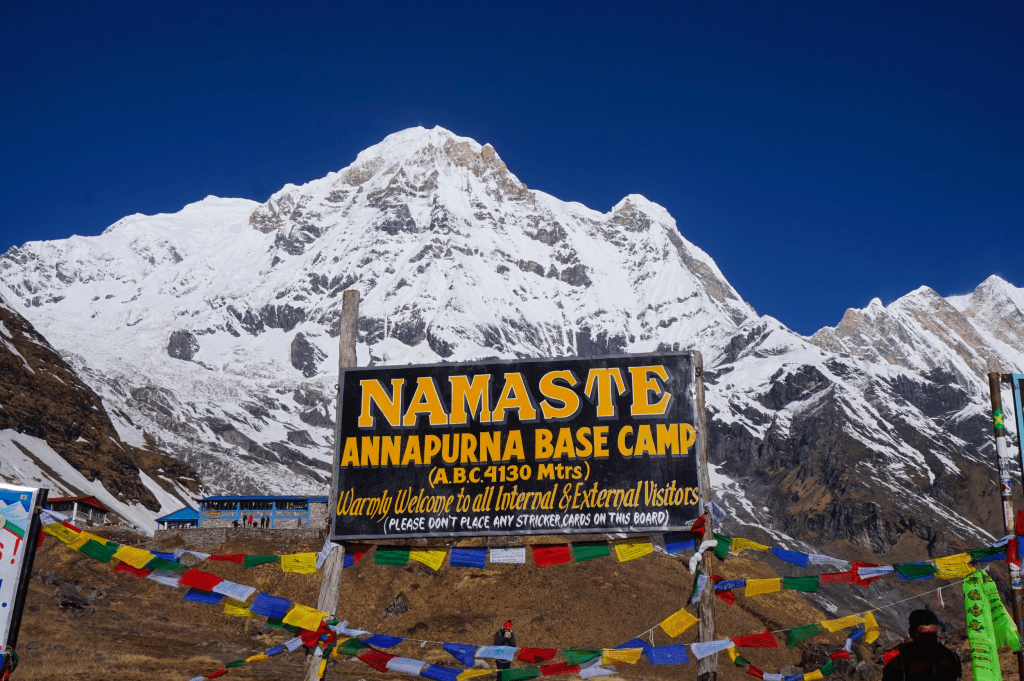
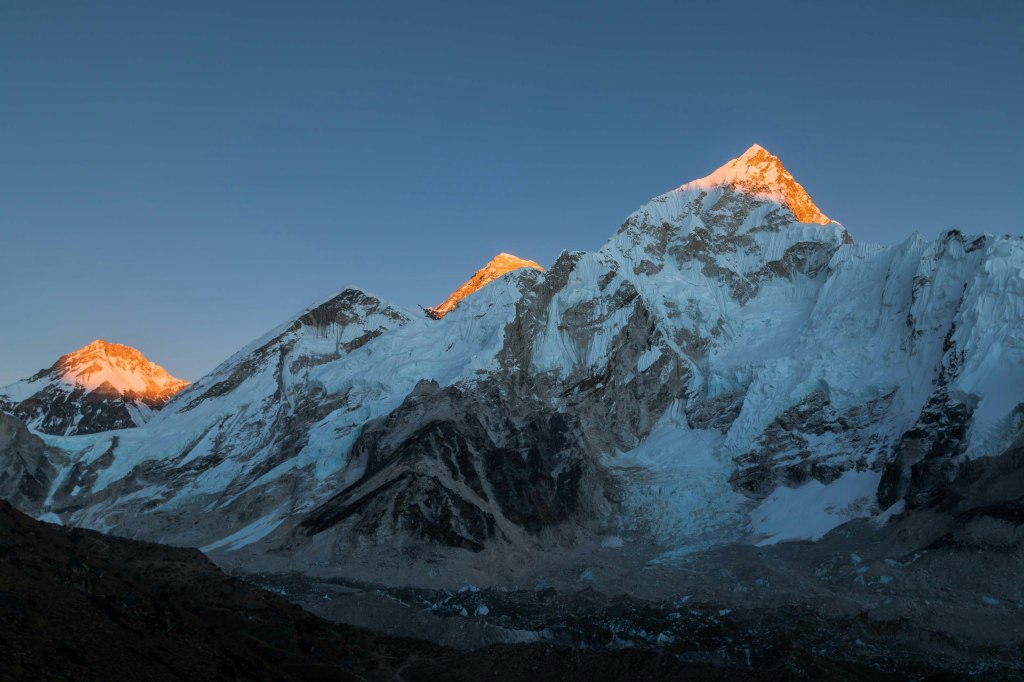
After breakfast, our trail takes us to the heart of the Sanctuary at the Annapurna Base Camp for an overnight stay. We'll spend a few hours going uphill, passing some shepherd huts without roofs on the side of a moraine. This area can be windy and often covered with snow. We'll walk past the Machhapuchre Base Camp, which isn't really a base camp since climbing the mountain isn't allowed. From here, it's about a 2-hour walk to the Annapurna Base Camp. This part of the trail has amazing views of the Himalayas and is surrounded by snow-capped mountains. The rest of the day, you can relax, explore, and enjoy the base camp.
Day 9 – Trek back Annapurna Base Camp to Bamboo
After breakfast, we'll start our journey down to Bamboo, carrying with us lots of great memories. This morning, we'll have a chance to see the sunrise and the last evening's sunset over Mt. Annapurna I and Annapurna Fangs. We'll be surrounded by mountains and will understand why this area is called the Annapurna Sanctuary. After spending a wonderful time here, we'll head back to Bamboo for the night. You can relax in the evening, enjoy the unforgettable view of the many snow-capped peaks, and have dinner.
Day 10 – Trek Bamboo to Jhinu Danda
Our trail will take us through the same route until we reach Chommrong. After passing Khuldighar, where there's an experimental sheep farm, we'll continue through rhododendron and bamboo forests. The view of the mountains, especially Mt. Machhapuchhre, is amazing. From the old Gurung village Chomrong, our trail goes down steeply to the Jhinu hot springs. Here, you can bathe in natural hot springs just 20 minutes away from our hotel.
Day 11 – Trek Jhinu Danda (Hot spring)
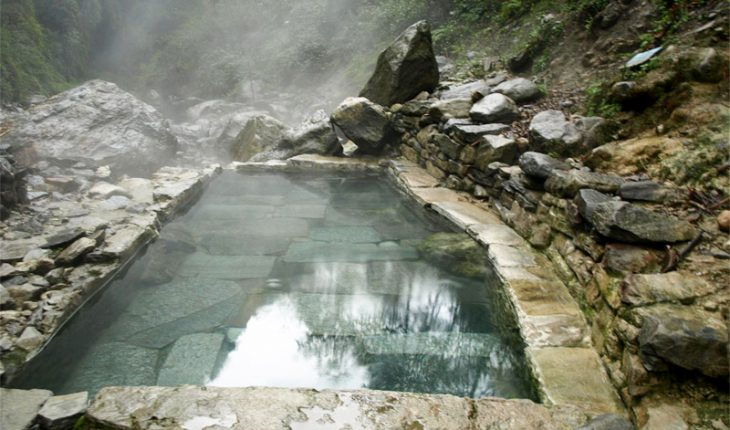
In the morning, you'll get a chance to visit the Hot Spring /Tatopani by the bank of the Modi Khola river. It's a short 20-minute walk from Jhinu Danda to these natural hot springs. After that, we'll return to the tea house for breakfast. The trail today first goes down to the Komrong Khola and then to New Bridge. We'll follow the river bank and go through a forest to reach Siwa through Kyum. From Siwa/ Syauli Bazaar, we'll drive to Pokhara in a Jeep or Taxi. The drive takes about 3 to 4 hours. We'll meet many other trekkers on the way, who are coming from Ghandruk after visiting Ghorepani Poon Hill.
Day 12 – Drive to Kathmandu
From Pokhara, a private vehicle will take you back to Kathmandu. In the evening, you can explore the ancient streets and markets to search for gifts and souvenirs for completing this amazing adventure.
Day 13 – Departure
The 9-day trekking adventure comes to an end and your guides will take you to Tribhuvan International Airport to bid you farewell.
The trip is inclusive of:
| IFMGA-certified Mountain Guide |
| Porters (1 porter will carry items for 2 people) |
| Accident insurance for trekking staff |
| All ground transport |
| All accommodations |
| Breakfast, lunch and dinner during the trek |
| Duffle bag for trekking |
| First aid medicine kit |
| Sagarmatha National Park Permit fee |
| Trekkers' Information Management System Fee (Please bring 2 passport size photos for permit) |
| Government taxes & service charges |
Not included:
| Flights between Singapore and Kathmandu |
| Travel insurance, with coverage for emergency rescue flight |
| Entry fee in the Kathmandu valley (varies from S$0.50 – S$10 for each site) |
| Nepal entry visa, which can be obtained on arrival at Tribhuwan International Airport in Kathmandu (S$56 for 30-day visa) |
| Soft drinks including water |
| Snacks and other personal expenses |
| Gratuities for trekking staff and drivers |
Do I need to be super fit?
This trek is no walk up Bukit Timah Hill, but it definitely isn’t as daunting as the name sounds. People of all ages have completed this trek – even a 6-year-old from Singapore. There will be breaks and porters to help with your bags.
Is this safe?
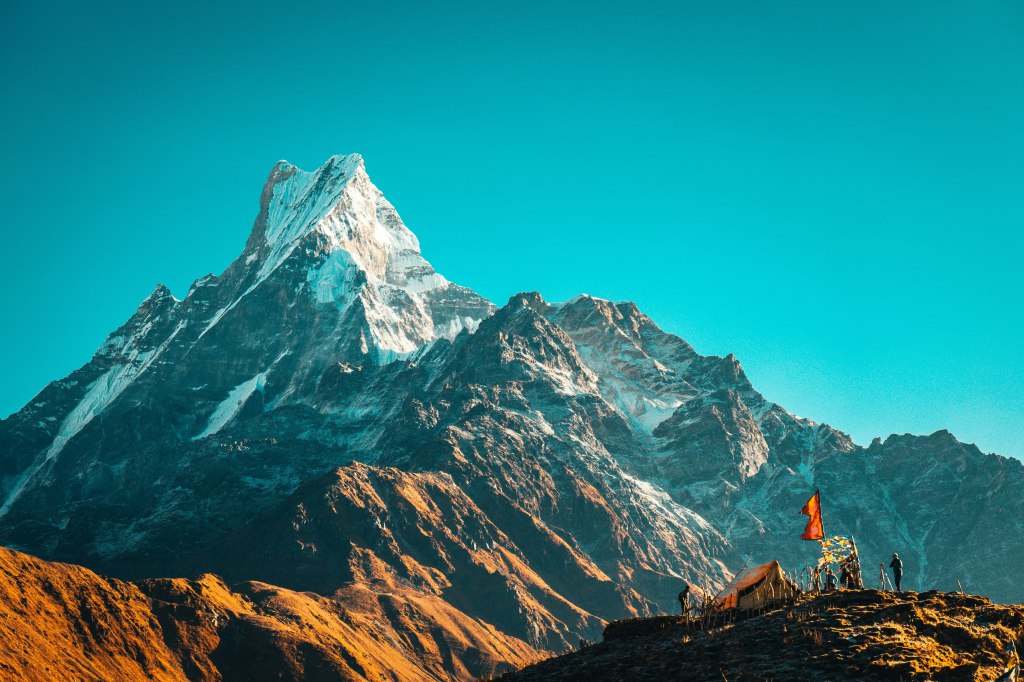
The treks in the Himalayas are generally safe. Furthermore, your guides are all highly certified professionals that will be with you every step of the way.
Who will be your guide?
Your guide for this trek will be Mr Tulsi Gurung.
He is a certified by the International Federation of Mountain Guides Association (IFMGA), which has highly rigorous requirements. As of 2023, there are only less than 150 IFMGA guides in Nepal.
Tulsi has summitted Everest twice. He is a board member of the Nepal Mountaineering Association. He is featured on the Netflix documentary, Aftershock. He has also performed multiple rescues.
You know you’ll be in safe hands on this trek.
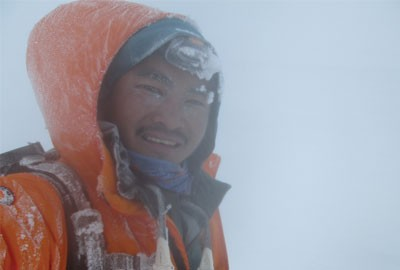
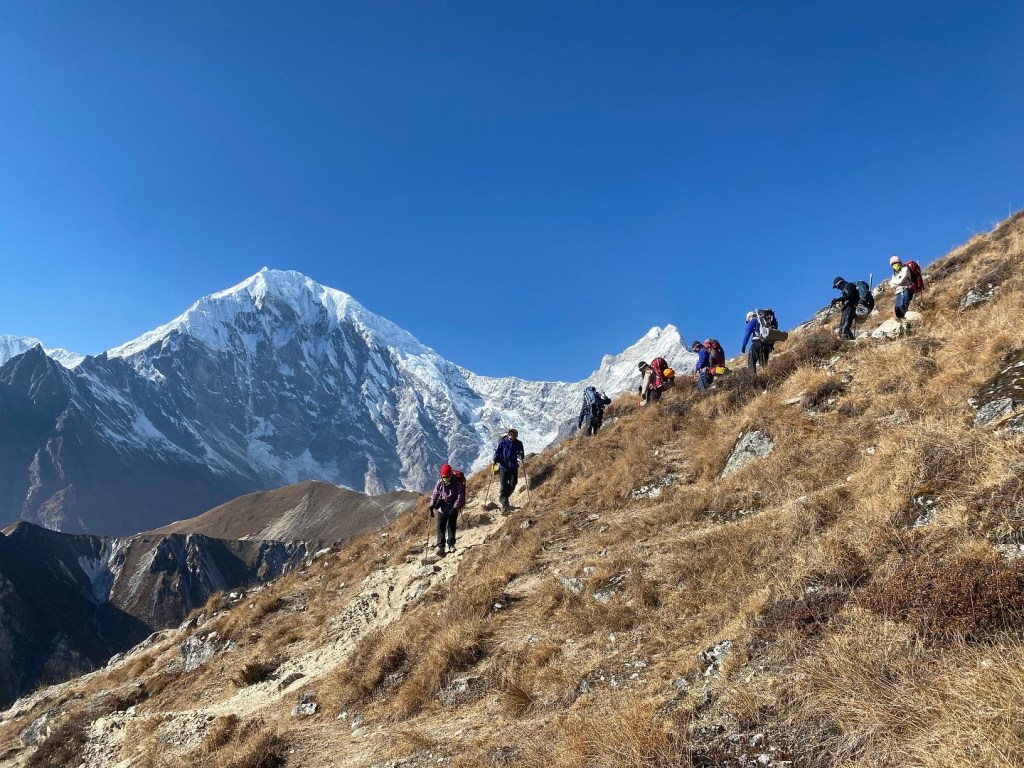
Tulsi is accompanied by his team from the Himalaya Summit Club. This team comprises highly experienced guides and porters who are also friends and relatives from his village.
The team members are super fun and friendly people, and many of them have trained to become Ghurkas, including for the Singapore Police! You can learn about their lives and culture while you are trekking with them.
Do I need special equipment?
Unlike the climb up Mount Everest, this is still a trek (not a mountaineering expedition!) so you don’t need too much fancy and expensive equipment.
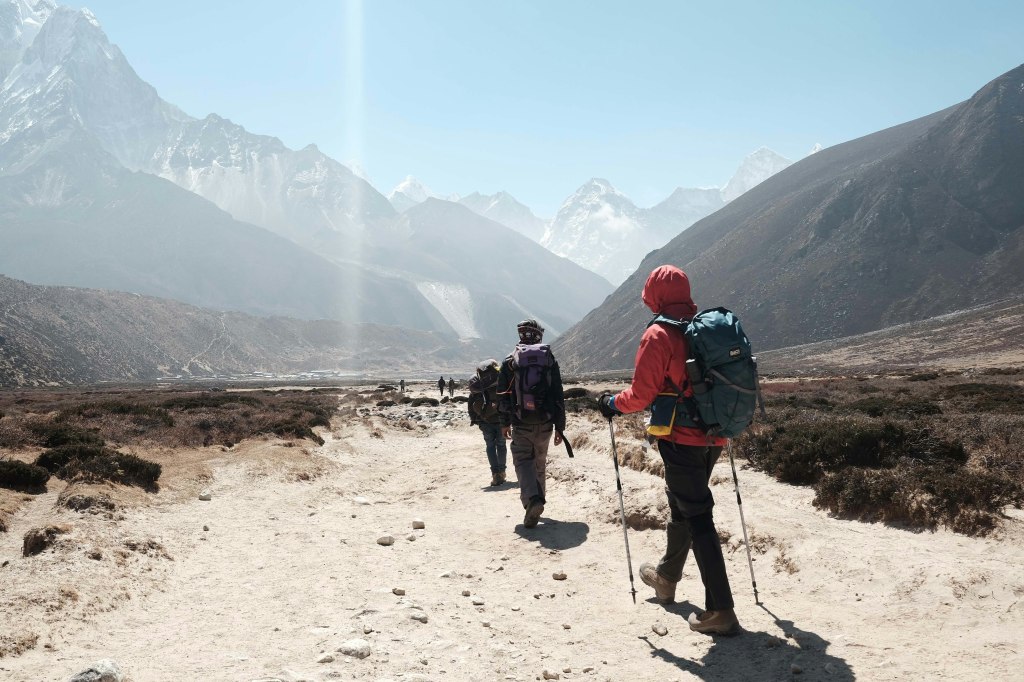
You do need a good pair of hiking boots, waterproof pants and lightweight warm clothing (depending on the season you go). Hiking poles can be helpful with balance too. You can get these from Decathlon or secondhand from Carousell for reasonable prices.
 Sotravel
Leave a comment